

- typical visit
- 60 min

Czech Republic
Best for friends in Liberec
Nestled in the lush Jizera Mountains at the foot of Ještěd mountain, Liberec is a charming city in northern Bohemia. This vibrant Czech town, home to around 108,000 residents, ranks as the fifth largest city in the country. Its setting along the Lusatian Neisse River is framed by scenic mountain ranges, and its historic center is beautifully preserved as an urban monument zone. Once celebrated for its booming textile industry, Liberec earned the nickname 'Manchester of Bohemia.' Dominating the city’s skyline is the iconic Ještěd Tower, a symbol of local pride. Since the late 1800s, Liberec has grown to include neighboring Vratislavice nad Nisou and the nearby city of Jablonec nad Nisou, forming a lively conurbation full of history and character.
Image: Wikimedia Commons
- typical visit
- 120 min
- typical visit
- 75 min
- typical visit
- 180 min
- typical visit
- 60 min
- typical visit
- 45 min
- typical visit
- 60 min
- typical visit
- 45 min
- typical visit
- 30 min
- typical visit
- 30 min
- typical visit
- 60 min
- typical visit
- 30 min
- typical visit
- 45 min
- typical visit
- 30 min
- typical visit
- 60 min
- typical visit
- 45 min
- typical visit
- 60 min
- typical visit
- 45 min
- typical visit
- 30 min
- typical visit
- 45 min
- typical visit
- 30 min

Build a day-by-day plan in the app
Turns city guides into routed itineraries with maps and stories.
Nearby cities
Within travel distance of Liberec.

Prague
Czech Republic
Prague, known locally as Praha, is the vibrant heart of the Czech Republic and its largest city. As you wander through its historic streets, you'll be surrounded by centuries-old buildings and winding alleys that echo its past as the capital of Bohemia. Sitting along the picturesque Vltava River, the city’s skyline is dominated by the iconic 9th-century castle and shimmering golden spires. Prague’s charm isn’t just in its history; it’s also in its quirky, lively atmosphere—from the Czech Cubism Museum to the colorful Jubilee Synagogue. Whether you’re exploring the castle, strolling along the river, or soaking up the bohemian vibe in the old town, Prague offers a unique blend of history and personality that’s impossible to ignore.
Dresden
Germany
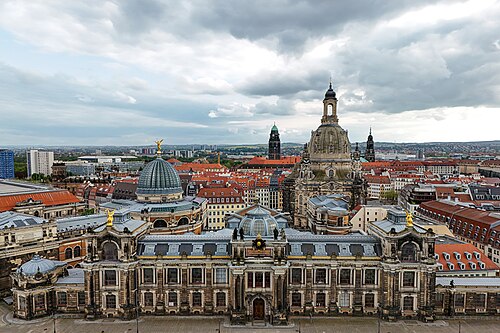
Step into Dresden, the vibrant heart of Saxony and a city that effortlessly blends its rich history with contemporary culture. Often called Elbflorenz, or 'Florence on the Elbe,' this city’s stunning architecture and thriving arts scene echo its glorious past, especially during the 18th-century Golden Age under August the Strong. After enduring the scars of WWII bombings and years of neglect, Dresden has reborn through passionate restoration, most famously with the Frauenkirche’s triumphant return in 2005—just in time for the city’s 800th anniversary. Today, Dresden is a lively hub of creativity and academia, drawing millions of visitors annually who come to explore its artistic treasures, picturesque streets, and dynamic urban vibe.
Wrocław
Poland
Wrocław, Poland’s largest city in Lower Silesia, boasts a rich and complex history that reflects its changing sovereignty over the centuries. Known as Breslau in German and until 1945 by its English name, it’s a city that has shifted between the Kingdom of Poland, Bohemia, the Austrian Empire, Prussia, and Germany. Today, with a population of around 674,000 within the city and 1.3 million in the metropolitan area, Wrocław is a vibrant hub of culture and history. After World War II, in 1945, the city was reincorporated into Poland as its borders shifted westward. Modern visitors might recognize Wrocław from its role in hosting UEFA Euro 2012 football matches, being named a European Capital of Culture in 2016, and hosting the World Games in 2017 — events that showcase its lively international spirit.

Chemnitz
Germany
Nestled in southwestern Saxony, Chemnitz is the third-largest city in the region, after Dresden and Leipzig. This city’s roots trace back to a monastery, earning city status as early as 1170. Situated at the foot of the Erzgebirge (Ore Mountains), Chemnitz blossomed in the 16th century into a thriving hub for trade and later became a key center for industry. Its growth was fueled by Saxon coal mining in the 18th century, transforming it into a powerhouse of German machine and textile manufacturing—earning it the nickname 'little Manchester.' Large districts like Kaßberg and Sonnenberg sprouted up during this industrial boom. Sadly, World War II left much of Chemnitz in ruins, nearly obliterating the city by 1945. Between 1953 and 1990, it was renamed Karl-Marx-Stadt—despite Marx never having visited or been directly linked to it. Post-war reconstruction saw significant development, much of which still stands today, including a notable bronze head gifted to the people in 1971.