

- typical visit
- 90 min
Czech Republic
Art & Culture in Pilsen
Nestled in the heart of Bohemia, Pilsen (or Plzeň) stands as a vibrant hub in the Czech Republic’s Central Europe. Famous worldwide as the birthplace of the iconic Pilsener (or pilsner) beer, this city proudly bears its name in every frothy sip. As the fourth largest urban center in the country and the largest city in West Bohemia, Pilsen offers a perfect blend of cultural richness and historical charm, making it an ideal starting point for exploring this captivating region.

Build a day-by-day plan in the app
Turns city guides into routed itineraries with maps and stories.
Nearby cities
Within travel distance of Pilsen.

Prague
Czech Republic
Prague, known locally as Praha, is the vibrant heart of the Czech Republic and its largest city. As you wander through its historic streets, you'll be surrounded by centuries-old buildings and winding alleys that echo its past as the capital of Bohemia. Sitting along the picturesque Vltava River, the city’s skyline is dominated by the iconic 9th-century castle and shimmering golden spires. Prague’s charm isn’t just in its history; it’s also in its quirky, lively atmosphere—from the Czech Cubism Museum to the colorful Jubilee Synagogue. Whether you’re exploring the castle, strolling along the river, or soaking up the bohemian vibe in the old town, Prague offers a unique blend of history and personality that’s impossible to ignore.

Regensburg
Germany
Step into the mysterious embrace of Regensburg, a city that whispers stories from the dawn of Roman times, founded in 179 AD. Nestled at the northernmost bend of the Danube in Bavaria, this ancient hub boasts a labyrinth of narrow alleys and a skyline dotted with medieval chapels and landmarks like the majestic Cathedral of St. Peter and the iconic Stone Bridge. Legend has it that the city’s countless tiny chapels ensure a perpetual chorus of church bells ringing through its winding streets. Its enchanting old town, along with Stadtamhof, has been a UNESCO World Heritage site since 2006, earning it the nickname ‘the northernmost city of Italy’ for its charming, southern-like charm.

Chemnitz
Germany
Nestled in southwestern Saxony, Chemnitz is the third-largest city in the region, after Dresden and Leipzig. This city’s roots trace back to a monastery, earning city status as early as 1170. Situated at the foot of the Erzgebirge (Ore Mountains), Chemnitz blossomed in the 16th century into a thriving hub for trade and later became a key center for industry. Its growth was fueled by Saxon coal mining in the 18th century, transforming it into a powerhouse of German machine and textile manufacturing—earning it the nickname 'little Manchester.' Large districts like Kaßberg and Sonnenberg sprouted up during this industrial boom. Sadly, World War II left much of Chemnitz in ruins, nearly obliterating the city by 1945. Between 1953 and 1990, it was renamed Karl-Marx-Stadt—despite Marx never having visited or been directly linked to it. Post-war reconstruction saw significant development, much of which still stands today, including a notable bronze head gifted to the people in 1971.
Dresden
Germany
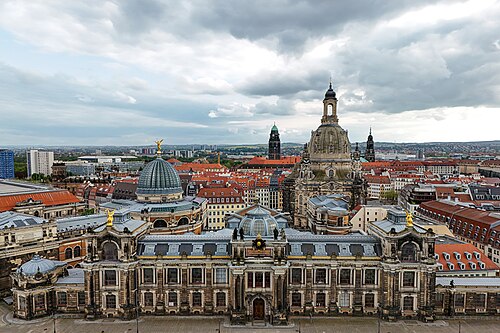
Step into Dresden, the vibrant heart of Saxony and a city that effortlessly blends its rich history with contemporary culture. Often called Elbflorenz, or 'Florence on the Elbe,' this city’s stunning architecture and thriving arts scene echo its glorious past, especially during the 18th-century Golden Age under August the Strong. After enduring the scars of WWII bombings and years of neglect, Dresden has reborn through passionate restoration, most famously with the Frauenkirche’s triumphant return in 2005—just in time for the city’s 800th anniversary. Today, Dresden is a lively hub of creativity and academia, drawing millions of visitors annually who come to explore its artistic treasures, picturesque streets, and dynamic urban vibe.