

- typical visit
- 60 min

France
Limoges
Step into the vibrant heart of Limoges, a city that blends centuries of history with a buzzing modern vibe. Recognized as a City of Art and History since 2008, Limoges offers a rich tapestry of attractions—from its iconic Gare des Bénédictins, often hailed as the city’s flagship landmark, to world-class museums like the Limoges Museum of Fine Arts and the Adrien Dubouché Museum. Wander through the medieval Saint Stephen Cathedral, explore the lush bishopric botanical garden, or stroll along the scenic banks of the Vienne River—all perfect spots to soak in the city’s artistic and cultural pulse.
Image: Wikimedia Commons
Get to know more
Things to do
## Things to do in Limoges Limoges is famous for its porcelain and enamel traditions, so begin with the Musée national Adrien Dubouché, home to the world’s largest public collection of porcelain, and the Four des Casseaux, a preserved historic porcelain kiln that reveals how the city’s celebrated ceramics were made. The city’s museums also cover local art, history and the Resistance, making Limoges a rewarding destination in wet weather as well as on bright days. For a sense of place, explore Limoges city centre on foot. The historic Quartier de la Cité combines cobbled streets, older buildings and the Saint-Étienne Cathedral with the peaceful Jardin botanique de l’Évêché and its views towards the Vienne. Continue through the medieval Quartier de la Boucherie, where the Saint-Aurélien chapel, traditional façades, cafés and restaurants add a more atmospheric, lived-in side of the city. Limoges-Bénédictins station is also worth seeing for its distinctive architecture. Weekend activities in Limoges can be as cultural or relaxed as you like: visit a museum or porcelain workshop, browse galleries and specialist enamel or porcelain shops, join a guided walk, then settle into a terrace, café or restaurant in the historic districts. Families can combine the botanical gardens with the city’s leisure attractions, while walkers can use Limoges as a base for trails and countryside outings nearby. For a longer day out, the martyred village and Memory Center at Oradour-sur-Glane, about 22 km away, offers a sobering historical excursion.
Things to do
## Things to do in Limoges Limoges is famous for its porcelain and enamel traditions, so begin with the Musée national Adrien Dubouché, home to the world’s largest public collection of porcelain, and the Four des Casseaux, a preserved historic porcelain kiln that reveals how the city’s celebrated ceramics were made. The city’s museums also cover local art, history and the Resistance, making Limoges a rewarding destination in wet weather as well as on bright days. For a sense of place, explore Limoges city centre on foot. The historic Quartier de la Cité combines cobbled streets, older buildings and the Saint-Étienne Cathedral with the peaceful Jardin botanique de l’Évêché and its views towards the Vienne. Continue through the medieval Quartier de la Boucherie, where the Saint-Aurélien chapel, traditional façades, cafés and restaurants add a more atmospheric, lived-in side of the city. Limoges-Bénédictins station is also worth seeing for its distinctive architecture. Weekend activities in Limoges can be as cultural or relaxed as you like: visit a museum or porcelain workshop, browse galleries and specialist enamel or porcelain shops, join a guided walk, then settle into a terrace, café or restaurant in the historic districts. Families can combine the botanical gardens with the city’s leisure attractions, while walkers can use Limoges as a base for trails and countryside outings nearby. For a longer day out, the martyred village and Memory Center at Oradour-sur-Glane, about 22 km away, offers a sobering historical excursion.
- typical visit
- 45 min
- typical visit
- 90 min
- typical visit
- 60 min
- typical visit
- 45 min
- typical visit
- 90 min
- typical visit
- 30 min
- typical visit
- 30 min
- typical visit
- 45 min
- typical visit
- 30 min
- typical visit
- 45 min
- typical visit
- 30 min
- typical visit
- 30 min
- typical visit
- 30 min
- typical visit
- 15 min
- typical visit
- 120 min
- typical visit
- 75 min
- typical visit
- 30 min
- typical visit
- 45 min
- typical visit
- 60 min
- typical visit
- 15 min
- typical visit
- 45 min
Frequently asked questions
Build a day-by-day plan in the app
Turns city guides into routed itineraries with maps and stories.
Explore more in France
Nearby cities
Within travel distance of Limoges.

Poitiers
France
Poitiers, situated along the river Clain in west-central France, stands as a city steeped in history and academic tradition. As the administrative center of the Vienne department and part of the Nouvelle-Aquitaine region, it boasts a population of approximately 89,000 residents as of 2022, with a larger metropolitan area encompassing over 133,000 inhabitants. Renowned for its wealth of art and historical monuments, Poitiers is affectionately called the “City of a Hundred Bell Towers,” a tribute to its distinctive skyline. Since establishing its university in 1431, the city has nurtured generations of scholars, including luminaries like René Descartes, Joachim du Bellay, and François Rabelais. Its picturesque streets are lined with well-preserved Romanesque architecture, from the ancient baptistery of Saint-Jean dating to the 4th century to the 12th-century Poitiers Cathedral and the Church of Notre-Dame-la-Grande. The Palace of Poitiers, once a courthouse and seat of power for the Counts of Poitou and Dukes of Aquitaine, also holds historical significance as the site where Eleanor of Aquitaine held her famous Court of Love. Poitiers' historical prominence is further marked by two pivotal battles: the Battle of Tours in 732, where Charles Martel’s Frankish forces repelled the Umayyad Caliphate, and the Battle of Poitiers in 1356, a decisive event of the Hundred Years’ War that resulted in the capture of King John II of France by the English. Today, the city's proximity to Paris and Bordeaux makes it an ideal location for innovation and tourism, notably hosting the Futuroscope technopole, which attracts over two million visitors annually and ranks among France’s top amusement parks.
Clermont-Ferrand
France
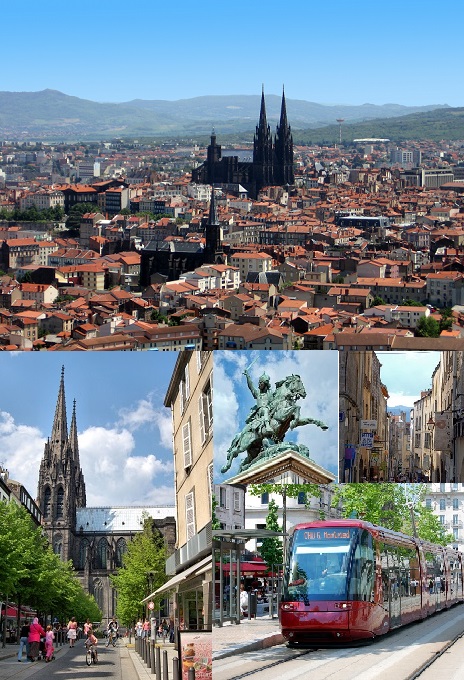
Nestled in the heart of France, Clermont-Ferrand stands as the capital of the Auvergne region, boasting a population of around 140,000 residents. This historic city is renowned for its striking volcanic surroundings, including the notable Puy de Dôme, a dormant volcano crowned with communication towers and visible from the city. Recognized by UNESCO in 2018 as a 'tectonic hotspot,' Clermont-Ferrand’s landscape is shaped by the Chain of Puy volcanoes encircling it. Its roots stretch back to antiquity, known to the Greeks as the center of the Arvernie tribe. During the Gallo-Roman era, it flourished under the name Augustonemetum, with ruins of its ancient forum still evident beneath the modern cathedral. Over centuries, the city endured invasions by Vandals, Alans, Visigoths, Franks, and Vikings, reflecting its strategic importance. The city gained prominence under the Capetian kings and was pivotal in medieval history, hosting the 1095 Council of Clermont, where Pope Urban II launched the First Crusade. By 1551, it became a royal town, firmly integrated into the Crown. Today, Clermont-Ferrand continues to thrive as a cultural hub, home to the renowned Clermont-Ferrand International Short Film Festival and the global headquarters of Michelin. Its skyline is marked by the striking black lava stone Gothic cathedral and the celebrated Place de Jaude, featuring a statue of Vercingetorix sculpted by Frédéric Bartholdi, symbolizing the city’s enduring spirit of liberty.