


- typical visit
- 120 min

France
Nature & Scenic in Lyon
Nestled at the meeting point of the Rhône and Saône rivers, Lyon pulses with a vibrant blend of history, culture, and culinary excellence. As France’s third-largest city, with over half a million residents, it boasts a dynamic metropolitan area second only to Paris. This city’s roots run deep, tracing back to Roman times when it served as a provincial capital, leaving behind a treasure trove of Roman ruins. Lyon’s architecture is a captivating tapestry—ranging from medieval structures in Old Lyon to sleek modern designs—shaped by its Renaissance prominence in silk production. Known globally as France’s gastronomic capital, Lyon’s streets are lined with an extraordinary density of restaurants, making it a haven for food lovers. Beyond its culinary fame, the city hosts UNESCO World Heritage sites like the historic districts of Old Lyon, Fourvière Hill, the Presqu'île, and the slopes of Croix-Rousse, each telling stories of a city that has continually evolved while honoring its past.
Image: Wikimedia Commons

Build a day-by-day plan in the app
Turns city guides into routed itineraries with maps and stories.
Nearby cities
Within travel distance of Lyon.
Saint-Étienne
France
Nestled in the heart of France's Rhône-Alpes region, Saint-Étienne lies about 60 kilometers southwest of Lyon. As the capital of the Loire Department, this city is perched within the scenic contours of the Massif Central. Visitors will find a city rich in history and industrial heritage, offering a unique glimpse into the area’s development over time.

Grenoble
France
Nestled in the heart of the French Alps, Grenoble is a sophisticated city that seamlessly blends natural grandeur with intellectual vibrancy. Home to approximately 158,000 residents as of 2017—and over half a million in its metropolitan embrace—it exudes an aura of scholarly excellence and cutting-edge innovation. Surrounded by the majestic Vercors, Chartreuse, and Belledonne mountain ranges, and bisected by the tranquil rivers Drac and Isère, this city is a hub of scientific discovery and academic prestige. Its campuses are renowned for world-class universities, while research centers such as Minatec for nanotechnologies, the CEA, and the European Synchrotron attract leading minds from across the globe. The western suburbs flourish as centers of high-tech industry, hosting giants like STMicroelectronics and Motorola, fostering a cosmopolitan community of international scientists and students. Grenoble’s allure lies not only in its natural beauty but also in its role as a beacon of innovation and intellectual pursuit.

Genève
Switzerland
Geneva, known locally as Genève in French and Genf in German, stands as Switzerland’s second-largest city and the most populous French-speaking hub in the country. Renowned as a global epicenter of diplomacy, it has hosted the headquarters of the International Committee of the Red Cross since 1863, embodying humanitarian ideals. While the United Nations maintains a significant presence at the Palais des Nations, Geneva’s influence extends beyond, with numerous UN agencies and international organizations calling it home. Despite its modest population of around 200,000 within the city proper, the metropolitan area swells to over a million residents, blending political gravitas with vibrant cosmopolitan living.
Clermont-Ferrand
France
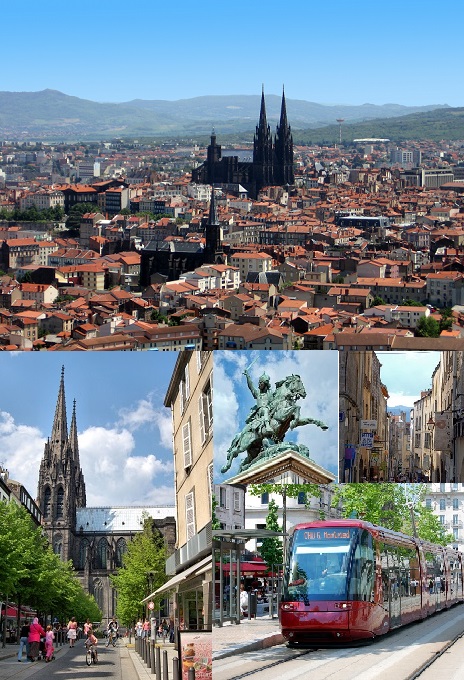
Nestled in the heart of France, Clermont-Ferrand stands as the capital of the Auvergne region, boasting a population of around 140,000 residents. This historic city is renowned for its striking volcanic surroundings, including the notable Puy de Dôme, a dormant volcano crowned with communication towers and visible from the city. Recognized by UNESCO in 2018 as a 'tectonic hotspot,' Clermont-Ferrand’s landscape is shaped by the Chain of Puy volcanoes encircling it. Its roots stretch back to antiquity, known to the Greeks as the center of the Arvernie tribe. During the Gallo-Roman era, it flourished under the name Augustonemetum, with ruins of its ancient forum still evident beneath the modern cathedral. Over centuries, the city endured invasions by Vandals, Alans, Visigoths, Franks, and Vikings, reflecting its strategic importance. The city gained prominence under the Capetian kings and was pivotal in medieval history, hosting the 1095 Council of Clermont, where Pope Urban II launched the First Crusade. By 1551, it became a royal town, firmly integrated into the Crown. Today, Clermont-Ferrand continues to thrive as a cultural hub, home to the renowned Clermont-Ferrand International Short Film Festival and the global headquarters of Michelin. Its skyline is marked by the striking black lava stone Gothic cathedral and the celebrated Place de Jaude, featuring a statue of Vercingetorix sculpted by Frédéric Bartholdi, symbolizing the city’s enduring spirit of liberty.