
- typical visit
- 15 min
France
Montpellier
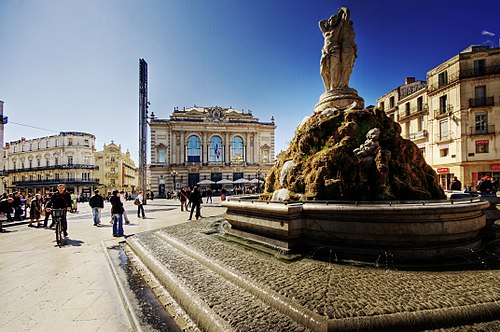
Montpellier embodies a captivating blend of history and modernity in the heart of southwestern France's Languedoc-Roussillon region. Since the 1990s, this vibrant city has experienced rapid growth, resulting in sleek, contemporary districts that stand in striking contrast to the labyrinth of medieval streets that define its historic core. Home to the University of Montpellier—the oldest medical school in Europe—this university infuses the city with youthful energy and academic prestige, attracting students from around the world. The city’s enviable Mediterranean climate offers dry, sun-drenched summers and mild winters, making it an attractive year-round destination. Though not directly on the coast, Montpellier's excellent public transport connects visitors to pristine beaches and charming villages nearby, perfect for day trips that showcase the region’s scenic beauty.
Image: Wikimedia Commons
Get to know more
Things to do
## Things to do in Montpellier Montpellier is famous for the way its medieval heritage, long academic tradition and bold contemporary architecture meet a lively Mediterranean atmosphere. Begin in the pedestrian Écusson, the historic city centre, where winding streets lead between elegant private mansions, small squares and cafés. Place de la Comédie, centred on the Three Graces fountain, is the natural starting point; from there, continue towards the leafy Esplanade Charles-de-Gaulle and the Promenade du Peyrou for views of the city and the Arc de Triomphe. The former Faculty of Medicine, associated with Montpellier’s centuries-old reputation for medical learning, and the medieval Mikvé are among the city’s more distinctive heritage experiences. Guided tours are a good way to see courtyards and monuments that are not always open independently. For art and culture, visit the Fabre Museum, whose collection ranges from Renaissance and European masters to modern and contemporary works. Montpellier is also known for its love of design and contemporary architecture: walk from the Écusson through the Polygone area into Antigone, Ricardo Bofill’s grand, neoclassical-inspired district, then follow the Lez towards the Jacques-Cœur basin. The route contrasts historic stone streets with monumental squares, modern buildings and the city’s distinctive tram designs. With its student population, restaurants, wine bars, theatres and year-round cultural programme, Montpellier has an energetic evening scene as well as plenty to do during the day. A weekend in Montpellier works well at an unhurried pace: browse a market, linger over regional food, explore the centre on foot and leave time for a museum or a walk along the Lez. The Antigone farmers’ market is held on Sunday mornings, while other covered and open-air markets run through the week and offer fruit, flowers, local produce and prepared food. Check the current events calendar for concerts, exhibitions, performances and festivals before travelling, as the programme changes throughout the year. Nature and the coast are easy additions. The free Zoo de Montpellier in the Grand Parc de Lunaret combines animal enclosures with extensive green space, while the nearby Jardin des Plantes offers a quieter botanical stop; check current opening information before visiting. Montpellier is about 11 km from the Mediterranean, so a beach day at Carnon or Palavas-les-Flots is practical by public transport, bicycle or a combination of tram and bus. Carnon has a calmer resort feel, while Palavas offers a livelier seafront with restaurants and bars. For a shorter introduction to the city, choose a walking tour, a self-guided stroll through the Écusson, or the little tourist train when available.
Things to do
## Things to do in Montpellier Montpellier is famous for the way its medieval heritage, long academic tradition and bold contemporary architecture meet a lively Mediterranean atmosphere. Begin in the pedestrian Écusson, the historic city centre, where winding streets lead between elegant private mansions, small squares and cafés. Place de la Comédie, centred on the Three Graces fountain, is the natural starting point; from there, continue towards the leafy Esplanade Charles-de-Gaulle and the Promenade du Peyrou for views of the city and the Arc de Triomphe. The former Faculty of Medicine, associated with Montpellier’s centuries-old reputation for medical learning, and the medieval Mikvé are among the city’s more distinctive heritage experiences. Guided tours are a good way to see courtyards and monuments that are not always open independently. For art and culture, visit the Fabre Museum, whose collection ranges from Renaissance and European masters to modern and contemporary works. Montpellier is also known for its love of design and contemporary architecture: walk from the Écusson through the Polygone area into Antigone, Ricardo Bofill’s grand, neoclassical-inspired district, then follow the Lez towards the Jacques-Cœur basin. The route contrasts historic stone streets with monumental squares, modern buildings and the city’s distinctive tram designs. With its student population, restaurants, wine bars, theatres and year-round cultural programme, Montpellier has an energetic evening scene as well as plenty to do during the day. A weekend in Montpellier works well at an unhurried pace: browse a market, linger over regional food, explore the centre on foot and leave time for a museum or a walk along the Lez. The Antigone farmers’ market is held on Sunday mornings, while other covered and open-air markets run through the week and offer fruit, flowers, local produce and prepared food. Check the current events calendar for concerts, exhibitions, performances and festivals before travelling, as the programme changes throughout the year. Nature and the coast are easy additions. The free Zoo de Montpellier in the Grand Parc de Lunaret combines animal enclosures with extensive green space, while the nearby Jardin des Plantes offers a quieter botanical stop; check current opening information before visiting. Montpellier is about 11 km from the Mediterranean, so a beach day at Carnon or Palavas-les-Flots is practical by public transport, bicycle or a combination of tram and bus. Carnon has a calmer resort feel, while Palavas offers a livelier seafront with restaurants and bars. For a shorter introduction to the city, choose a walking tour, a self-guided stroll through the Écusson, or the little tourist train when available.


Frequently asked questions
Build a day-by-day plan in the app
Turns city guides into routed itineraries with maps and stories.
Nearby cities
Within travel distance of Montpellier.
Nîmes
France
Nestled in the heart of southern France’s Gard department, Nîmes is a city that whispers tales of antiquity. With a population of approximately 137,000, this town boasts a stunning Roman temple, astonishingly preserved in pristine condition—arguably more intact than many of its counterparts in ancient Rome. Wander through the streets to discover other Roman relics and the mysterious Diana's Palace, each echoing the grandeur of a bygone era.

Avignon
France
Step into the enchanting city of Avignon, the historic heart of Provence-Alpes-Côte d'Azur, gracefully perched along the Rhône River. Recognized as a UNESCO World Heritage Site, its medieval walls and architectural treasures whisper tales of its illustrious past. Once the seat of the Papacy during the 14th century, Avignon boasts a rich legacy as 'The City of the Popes,' with the majestic Palais des Papes standing as a testament to its ecclesiastical prominence. Today, this refined city continues to captivate visitors with its vibrant arts scene, including the renowned Festival d’Avignon, making it an essential destination for those seeking history, culture, and elegance.

Narbonne
France
Nestled in the heart of the Narbonnaise en Méditerranée Regional Natural Park, Narbonne emerges as a refined coastal gem in Aude, southern France. This historic city, once a thriving port, offers a captivating blend of natural beauty and cultural riches—from the rugged Clape massif to the tranquil Sainte-Marie de Fontfroide Abbey and the scenic Bages-Sigean pond. Just 15 kilometers from the shimmering Mediterranean, Narbonne invites discerning travelers to explore its rich past and stunning landscapes, all within the charming Occitania region.

Marseille
France
Perched along France’s southern coast, Marseille stands as the nation’s second-largest city, with a vibrant population of approximately 1.6 million residents in its urban area as of 2019. A historic hub and a bustling Mediterranean port, it serves as the economic heartbeat of the Provence-Alpes-Côte d'Azur region. Recognized as the European Capital of Culture in 2013, Marseille celebrated a year of extensive cultural events, new infrastructure projects, and urban renewal efforts that highlighted its rich heritage and modern vitality.

Aix-en-Provence
France
Nestled in the heart of southern France, Aix-en-Provence is a city where history and artistry intertwine amid sun-drenched streets. This charming Provençal town, just 30 kilometers north of Marseille, once served as the regional capital of Provence. Today, it pulses with life, enriched by its connection to the high-speed TGV train, which brings a steady stream of visitors from the north. The city’s vibrant atmosphere is amplified by a lively shopping scene that surprises visitors with its variety and quality, considering its modest size. Anchored by three universities and several French-language institutions for international students, Aix buzzes with youthful energy and intellectual curiosity. Its timeless streets and storied past reflect a place where culture, history, and modern vitality coexist in perfect harmony.

Perpignan
France
Perpignan, known as Perpinyà in Catalan, stands as the vibrant capital of France’s Pyrénées-Orientales department, nestled just 15 kilometers from the Mediterranean coast. Home to approximately 120,000 residents, this city is distinguished by its two flowing rivers—the Têt to the north and the Basse traversing its historic center. Once the continental hub of the Kingdom of Majorca, Perpignan’s rich history is vividly reflected in its architecture, which showcases centuries of economic prowess and educational prominence. Its charming streets and picturesque neighborhoods between the Têt and Basse rivers reveal a city proud of its Catalan roots and historical significance.