

- typical visit
- 60 min

France
Nancy
Nestled in the Grand Est region of northeastern France, Nancy is a city rich in history and cultural heritage. As the capital of Meurthe-et-Moselle, it also serves as the economic hub of Lorraine. Home to over 47,000 students and three major universities, Nancy stands out as a vibrant academic center. Historically, it was a powerhouse of industry and culture in Northeast France, with its diverse architecture reflecting centuries of development. The heart of the old town, including the Ducal Palace, is designated as a UNESCO World Heritage Site, offering visitors a glimpse into its storied past.
Image: Wikimedia Commons
Get to know more
Things to do
## What to do in Nancy Nancy is best explored through the contrast between its grand 18th-century squares and its inventive Art Nouveau heritage. What Nancy is famous for begins with Place Stanislas, the city’s golden architectural showpiece and part of the UNESCO-listed ensemble that also includes Place de la Carrière and Place d’Alliance. Take time to admire the wrought-iron gates, fountains and surrounding buildings before wandering into the historic Old Town, where the former capital of the Dukes of Lorraine reveals a more medieval character. For what to do in Nancy city centre, combine the squares with the Musée des Beaux-Arts, the Palace of the Dukes of Lorraine–Lorraine Museum and the Museum-Aquarium. Then follow an Art Nouveau trail through the streets to discover the work of Émile Gallé, Louis Majorelle and Jacques Gruber. The Villa Majorelle and the Musée de l’École de Nancy offer a closer look at the movement’s furniture, glass, stained glass and flowing botanical designs, while guided walks can connect landmarks such as the Excelsior brasserie with the city’s Art Nouveau villas. When you want a break from museums, stroll through the 21-hectare Parc de la Pépinière, look for its free-roaming peacocks and stop for a waffle. The Jean-Marie Pelt Botanical Garden provides a larger green escape, while the banks of the Meurthe combine riverside walking and cycling with cafés and terraces. Nancy Thermal adds a relaxing indoor option, and families can choose from swimming pools and other leisure facilities around the greater Nancy area. Nancy also has plenty to do after sightseeing. The Opéra national de Lorraine, Salle Poirel and Théâtre de la Manufacture bring concerts, theatre and opera to the centre; L’Autre Canal focuses on contemporary music, and the Zénith hosts larger touring shows. Football at Stade Marcel Picot and basketball with SLUC Nancy Basket give sports fans a distinctly local evening, while cinemas provide an easy rainy-day alternative. For a weekend, mix the UNESCO squares and Old Town with an Art Nouveau visit, a museum or garden, and an evening performance. Depending on the season, look out for Nancy Jazz Pulsations, the Saint Nicholas festivities, summer video mapping on Place Stanislas and other festivals and open-air cultural events. Leave time for the city’s cafés, restaurants and local specialities as well as its landmarks, since Nancy’s appeal lies as much in lingering between visits as in checking off sights.
Things to do
## What to do in Nancy Nancy is best explored through the contrast between its grand 18th-century squares and its inventive Art Nouveau heritage. What Nancy is famous for begins with Place Stanislas, the city’s golden architectural showpiece and part of the UNESCO-listed ensemble that also includes Place de la Carrière and Place d’Alliance. Take time to admire the wrought-iron gates, fountains and surrounding buildings before wandering into the historic Old Town, where the former capital of the Dukes of Lorraine reveals a more medieval character. For what to do in Nancy city centre, combine the squares with the Musée des Beaux-Arts, the Palace of the Dukes of Lorraine–Lorraine Museum and the Museum-Aquarium. Then follow an Art Nouveau trail through the streets to discover the work of Émile Gallé, Louis Majorelle and Jacques Gruber. The Villa Majorelle and the Musée de l’École de Nancy offer a closer look at the movement’s furniture, glass, stained glass and flowing botanical designs, while guided walks can connect landmarks such as the Excelsior brasserie with the city’s Art Nouveau villas. When you want a break from museums, stroll through the 21-hectare Parc de la Pépinière, look for its free-roaming peacocks and stop for a waffle. The Jean-Marie Pelt Botanical Garden provides a larger green escape, while the banks of the Meurthe combine riverside walking and cycling with cafés and terraces. Nancy Thermal adds a relaxing indoor option, and families can choose from swimming pools and other leisure facilities around the greater Nancy area. Nancy also has plenty to do after sightseeing. The Opéra national de Lorraine, Salle Poirel and Théâtre de la Manufacture bring concerts, theatre and opera to the centre; L’Autre Canal focuses on contemporary music, and the Zénith hosts larger touring shows. Football at Stade Marcel Picot and basketball with SLUC Nancy Basket give sports fans a distinctly local evening, while cinemas provide an easy rainy-day alternative. For a weekend, mix the UNESCO squares and Old Town with an Art Nouveau visit, a museum or garden, and an evening performance. Depending on the season, look out for Nancy Jazz Pulsations, the Saint Nicholas festivities, summer video mapping on Place Stanislas and other festivals and open-air cultural events. Leave time for the city’s cafés, restaurants and local specialities as well as its landmarks, since Nancy’s appeal lies as much in lingering between visits as in checking off sights.


Frequently asked questions
Build a day-by-day plan in the app
Turns city guides into routed itineraries with maps and stories.
Nearby cities
Within travel distance of Nancy.
Metz
France
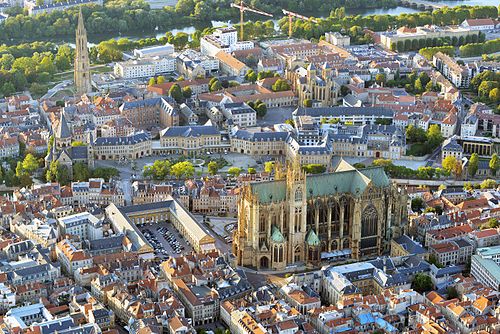
Nestled in northeastern France along the border with Luxembourg and Germany, Metz is a city rich in history and culture. At the meeting point of the Moselle and Seille rivers, it serves as the administrative heart of the Moselle department and hosts the regional parliament of Grand Est. Its location at the crossroads of France, Germany, and Luxembourg places Metz at the center of the European Greater Region and the SaarLorLux euroregion, making it a vibrant hub of cross-cultural exchange. With a history spanning over 3,000 years, Metz has witnessed its evolution from a Celtic oppidum to a vital Gallo-Roman city, a Merovingian capital, and the birthplace of the Carolingian dynasty. The city played a significant role in Gregorian chant and claims one of Europe's oldest republics. Its cultural landscape reflects a blend of French and German influences, shaped by its strategic position and complex past. Metz's architectural treasures include the stunning Saint-Stephen Cathedral, renowned for having the largest collection of stained glass in the world. The Basilica of Saint-Pierre-aux-Nonnains stands as France's oldest church, while the Imperial Station Palace offers a glimpse into its imperial history, housing the former residence of the German Kaiser. The city also boasts France’s oldest operational opera house, alongside world-class venues like the Arsenal Concert Hall and the Centre Pompidou-Metz museum. Known as La Ville Verte, Metz is celebrated for its abundant parks and green spaces, earning its nickname as the Green City. Its historic city center is one of France’s largest pedestrian shopping districts, blending commerce with charm. As a historic military town, Metz remains the economic engine of Lorraine, specializing in information technology and automotive industries. It is home to the University of Lorraine, Georgia Tech Europe, and cutting-edge research centers focused on metallurgy and materials science — a testament to the region’s rich iron and steel heritage.
Saarbrücken
Germany
Saarbrücken boasts a storied history that spans over a millennium, with roots tracing back to the ancient Roman Empire. Its architectural landscape reflects this rich heritage, set dramatically along the winding bends of the Saar River. As the capital of Germany’s Saarland, a federal state often overlooked by travelers, this city offers a refined gateway into a lesser-known corner of the country. With a modest population of around 180,000 residents as of 2018, Saarbrücken invites those seeking a blend of historic elegance and understated charm, making it a discreet yet captivating destination.

Luxembourg
Luxembourg
Luxembourg, officially known as the Grand Duchy of Luxembourg, is a small but mighty landlocked country nestled in the Benelux region at the crossroads of Germanic and Latin cultures. This nation has carved out a reputation for its robust steel, finance, and tech industries, benefiting from a strategic position in the heart of Western Europe. Despite its modest size, Luxembourg boasts more natural beauty than you might expect and ranks among the world's top three wealthiest nations, reflecting its high standard of living—though that also means prices can be quite steep! The capital, Luxembourg City, sits at the confluence of the Alzette and Pétrusse rivers, just a few hundred kilometers from Brussels and Cologne. This city is steeped in history, with Luxembourg Castle dating back to the early Middle Ages, around which a vibrant settlement grew. Today, it’s a melting pot of cultures, with over 160 nationalities and a population of nearly 138,000, making it the most populous and diverse city in the country. As a vital hub for European institutions, Luxembourg City hosts the European Court of Justice, the European Parliament’s secretariat, and numerous other agencies, cementing its role as a de facto European capital. With a booming economy, excellent safety rankings, and a high quality of life, Luxembourg offers both a glimpse into its rich history and a window into its modern, cosmopolitan spirit.

Strasbourg
France
Nestled in the Alsace region of northeastern France, Strasbourg stands as the capital of the Grand-Est area and a vibrant hub of European activity. With its picturesque historic center—the Grande Île—standing as the first city district entirely designated as a UNESCO World Heritage Site, the city offers a captivating blend of history and modern diplomacy. As the seat of the European Parliament and other key European institutions, Strasbourg has earned recognition as one of the continent’s de facto capitals, embodying a unique Franco-German cultural nexus. Its population exceeds 300,000 within the city proper, while the greater metropolitan area boasts over a million residents, making it a significant center of commerce, transportation, and international diplomacy. The city's historic core, complemented by the UNESCO-listed Neustadt district, reflects a rich history of cultural exchange and resilience. Strasbourg’s economy thrives on manufacturing, engineering, and its strategic port on the Rhine, which ranks as France’s second-largest river port after Paris and the second largest on the Rhine after Duisburg.

Mulhouse
France
Nestled in the Alsace region of France, Mulhouse is a city with a rich industrial past and a bright future. Located just west of the Rhine River near the German border, this city has been transforming from its hard-working roots into a vibrant cultural hub. Thanks to investments in revitalizing neighborhoods, modernizing public transport, and attracting new shops, Mulhouse is gradually shedding its old reputation and embracing a renewed identity.

Freiburg
Germany
Nestled at the threshold of the enchanting Black Forest, Freiburg im Breisgau emerges as a city where nature’s beauty and cultural heritage intertwine. As of 2024, this southwestern gem of Baden-Württemberg boasts approximately 237,000 residents and enjoys a sun-drenched reputation, basking in more sunlight than most of Germany’s urban centers. The Dreisam River guides the city’s lively streets, whispering stories of centuries past and present. Here, history and modern life dance in harmony amid cobblestone alleys, medieval spires, and vibrant neighborhoods, inviting travelers to experience its warm, radiant soul.