

- typical visit
- 60 min
Germany
Saarbrücken
Saarbrücken boasts a storied history that spans over a millennium, with roots tracing back to the ancient Roman Empire. Its architectural landscape reflects this rich heritage, set dramatically along the winding bends of the Saar River. As the capital of Germany’s Saarland, a federal state often overlooked by travelers, this city offers a refined gateway into a lesser-known corner of the country. With a modest population of around 180,000 residents as of 2018, Saarbrücken invites those seeking a blend of historic elegance and understated charm, making it a discreet yet captivating destination.
Get to know more
Things to do
## Things to do in Saarbrücken Saarbrücken is famous for its relaxed blend of German and French influences, 18th-century Baroque architecture and lively cultural scene. Begin in the city centre with a walk around Schlossplatz and Saarbrücken Castle, then admire the Ludwigskirche and the other buildings designed or influenced by architect Friedrich Joachim Stengel. The pedestrianised St. Johanner Markt is the social heart of town, with boutiques, cafés, bars, restaurants and picturesque lanes such as Fröschengasse—an easy place to pause for coffee, browse local shops or settle in for an evening meal. Guided city tours and the museums of the Saarland Cultural Heritage Foundation provide more context on the city’s long history and artistic life. For culture, check the programme at the Saarländisches Staatstheater for opera, theatre, ballet and concerts, and look out for performances by the Deutsche Radio Philharmonie Saarbrücken Kaiserslautern or public concerts at the Hochschule für Musik. Saarbrücken is also known for festivals: the Max Ophüls Preis focuses on emerging German-language filmmakers, while the French-German PERSPECTIVES festival brings cross-border theatre and performance to the city. These make a weekend in Saarbrücken especially rewarding, combining daytime sightseeing and museum visits with an evening show, concert or festival event. For a different perspective on the region’s industrial heritage, take a day trip to the UNESCO-listed Völklingen Ironworks. The city also has plenty to do outdoors. Follow the Saar’s leafy banks, relax in the Staden park, or explore the Deutsch-Französischer Garten. Hikers can head to the Urwald vor den Toren der Stadt, a wild forest area on the edge of Saarbrücken, while the nearby Almet recreational landscape offers another green escape. With much of the centre walkable and nature close at hand, Saarbrücken works well for a culture-filled city break, a relaxed weekend or an outdoor day alongside the Saar.
Things to do
## Things to do in Saarbrücken Saarbrücken is famous for its relaxed blend of German and French influences, 18th-century Baroque architecture and lively cultural scene. Begin in the city centre with a walk around Schlossplatz and Saarbrücken Castle, then admire the Ludwigskirche and the other buildings designed or influenced by architect Friedrich Joachim Stengel. The pedestrianised St. Johanner Markt is the social heart of town, with boutiques, cafés, bars, restaurants and picturesque lanes such as Fröschengasse—an easy place to pause for coffee, browse local shops or settle in for an evening meal. Guided city tours and the museums of the Saarland Cultural Heritage Foundation provide more context on the city’s long history and artistic life. For culture, check the programme at the Saarländisches Staatstheater for opera, theatre, ballet and concerts, and look out for performances by the Deutsche Radio Philharmonie Saarbrücken Kaiserslautern or public concerts at the Hochschule für Musik. Saarbrücken is also known for festivals: the Max Ophüls Preis focuses on emerging German-language filmmakers, while the French-German PERSPECTIVES festival brings cross-border theatre and performance to the city. These make a weekend in Saarbrücken especially rewarding, combining daytime sightseeing and museum visits with an evening show, concert or festival event. For a different perspective on the region’s industrial heritage, take a day trip to the UNESCO-listed Völklingen Ironworks. The city also has plenty to do outdoors. Follow the Saar’s leafy banks, relax in the Staden park, or explore the Deutsch-Französischer Garten. Hikers can head to the Urwald vor den Toren der Stadt, a wild forest area on the edge of Saarbrücken, while the nearby Almet recreational landscape offers another green escape. With much of the centre walkable and nature close at hand, Saarbrücken works well for a culture-filled city break, a relaxed weekend or an outdoor day alongside the Saar.


Frequently asked questions
Build a day-by-day plan in the app
Turns city guides into routed itineraries with maps and stories.
Nearby cities
Within travel distance of Saarbrücken.
Metz
France
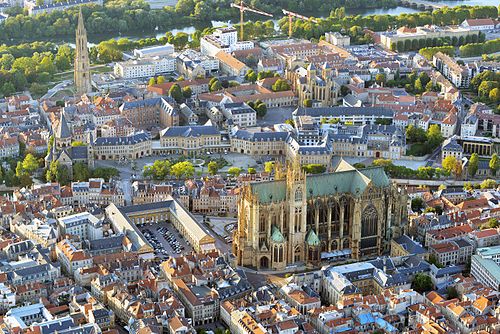
Nestled in northeastern France along the border with Luxembourg and Germany, Metz is a city rich in history and culture. At the meeting point of the Moselle and Seille rivers, it serves as the administrative heart of the Moselle department and hosts the regional parliament of Grand Est. Its location at the crossroads of France, Germany, and Luxembourg places Metz at the center of the European Greater Region and the SaarLorLux euroregion, making it a vibrant hub of cross-cultural exchange. With a history spanning over 3,000 years, Metz has witnessed its evolution from a Celtic oppidum to a vital Gallo-Roman city, a Merovingian capital, and the birthplace of the Carolingian dynasty. The city played a significant role in Gregorian chant and claims one of Europe's oldest republics. Its cultural landscape reflects a blend of French and German influences, shaped by its strategic position and complex past. Metz's architectural treasures include the stunning Saint-Stephen Cathedral, renowned for having the largest collection of stained glass in the world. The Basilica of Saint-Pierre-aux-Nonnains stands as France's oldest church, while the Imperial Station Palace offers a glimpse into its imperial history, housing the former residence of the German Kaiser. The city also boasts France’s oldest operational opera house, alongside world-class venues like the Arsenal Concert Hall and the Centre Pompidou-Metz museum. Known as La Ville Verte, Metz is celebrated for its abundant parks and green spaces, earning its nickname as the Green City. Its historic city center is one of France’s largest pedestrian shopping districts, blending commerce with charm. As a historic military town, Metz remains the economic engine of Lorraine, specializing in information technology and automotive industries. It is home to the University of Lorraine, Georgia Tech Europe, and cutting-edge research centers focused on metallurgy and materials science — a testament to the region’s rich iron and steel heritage.

Luxembourg
Luxembourg
Luxembourg, officially known as the Grand Duchy of Luxembourg, is a small but mighty landlocked country nestled in the Benelux region at the crossroads of Germanic and Latin cultures. This nation has carved out a reputation for its robust steel, finance, and tech industries, benefiting from a strategic position in the heart of Western Europe. Despite its modest size, Luxembourg boasts more natural beauty than you might expect and ranks among the world's top three wealthiest nations, reflecting its high standard of living—though that also means prices can be quite steep! The capital, Luxembourg City, sits at the confluence of the Alzette and Pétrusse rivers, just a few hundred kilometers from Brussels and Cologne. This city is steeped in history, with Luxembourg Castle dating back to the early Middle Ages, around which a vibrant settlement grew. Today, it’s a melting pot of cultures, with over 160 nationalities and a population of nearly 138,000, making it the most populous and diverse city in the country. As a vital hub for European institutions, Luxembourg City hosts the European Court of Justice, the European Parliament’s secretariat, and numerous other agencies, cementing its role as a de facto European capital. With a booming economy, excellent safety rankings, and a high quality of life, Luxembourg offers both a glimpse into its rich history and a window into its modern, cosmopolitan spirit.

Nancy
France
Nestled in the Grand Est region of northeastern France, Nancy is a city rich in history and cultural heritage. As the capital of Meurthe-et-Moselle, it also serves as the economic hub of Lorraine. Home to over 47,000 students and three major universities, Nancy stands out as a vibrant academic center. Historically, it was a powerhouse of industry and culture in Northeast France, with its diverse architecture reflecting centuries of development. The heart of the old town, including the Ducal Palace, is designated as a UNESCO World Heritage Site, offering visitors a glimpse into its storied past.

Strasbourg
France
Nestled in the Alsace region of northeastern France, Strasbourg stands as the capital of the Grand-Est area and a vibrant hub of European activity. With its picturesque historic center—the Grande Île—standing as the first city district entirely designated as a UNESCO World Heritage Site, the city offers a captivating blend of history and modern diplomacy. As the seat of the European Parliament and other key European institutions, Strasbourg has earned recognition as one of the continent’s de facto capitals, embodying a unique Franco-German cultural nexus. Its population exceeds 300,000 within the city proper, while the greater metropolitan area boasts over a million residents, making it a significant center of commerce, transportation, and international diplomacy. The city's historic core, complemented by the UNESCO-listed Neustadt district, reflects a rich history of cultural exchange and resilience. Strasbourg’s economy thrives on manufacturing, engineering, and its strategic port on the Rhine, which ranks as France’s second-largest river port after Paris and the second largest on the Rhine after Duisburg.

Baden-Baden
Germany
Tucked at the edge of the Black Forest in southwestern Germany, Baden-Baden is famed as a luxurious spa town built around natural thermal springs. While its reputation as a playground for the wealthy might precede it, this charming town offers a more accessible side—nestled in a lush, wooded valley, you can soak up its historic charm without breaking the bank. Recognized as one of Europe’s 11 Great Spa Towns and a UNESCO World Heritage site, Baden-Baden invites you to indulge in its timeless elegance and natural beauty.

Karlsruhe
Germany
Nestled along the banks of the Rhine in Baden-Württemberg, Karlsruhe is a sophisticated German city that marries legal prestige with a vibrant intellectual spirit. While it remains somewhat under the radar for international tourists, this city offers a tranquil environment ideal for work and study. Its proximity to the Black Forest and the French border adds a touch of continental elegance, making Karlsruhe a quietly influential hub of science, technology, and culture. With a population of around 300,000, it stands out as the largest city within a 60-kilometer radius, exemplifying understated charm and refined practicality.

Mannheim
Germany
Nestled in the northwest corner of Baden-Württemberg, Mannheim stands out as a vibrant hub where the Rhine and Neckar rivers converge. As Germany’s second-largest city in the state and a magnet for diverse cultures, Mannheim pulses with a lively mix of nationalities and modern urban energy. With around 310,000 residents as of 2020, this city is a dynamic blend of tradition and contemporary life, offering visitors a colorful tapestry of sights, sounds, and flavors.

Heidelberg
Germany
Nestled along the Neckar River, Heidelberg shines as one of Germany’s most enchanting destinations. Its cobbled streets and scenic timber-framed houses whisper stories of centuries past, all crowned by the iconic ruins of Heidelberg Castle. With Germany’s oldest university, founded way back in 1386, this city oozes academic charm and romantic allure. Whether wandering through its historic old town or soaking in panoramic views from the Königstuhl, Heidelberg invites you to uncover its timeless magic.