
- typical visit
- 120 min
Italy
Brescia
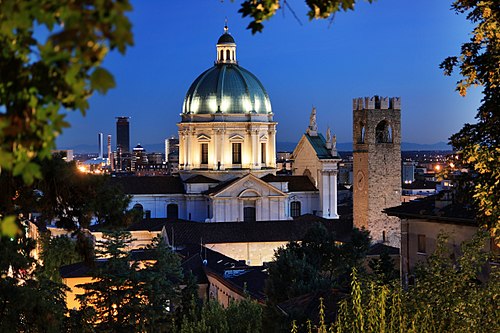
Nestled in the Lombardy region, Brescia is a city rich in history and industry, situated between the shimmering waters of Lake Garda, Lake Iseo, and the foothills of the Alps. About 100 kilometers east of Milan, this vibrant city serves as the provincial capital and a hub for automotive and metal industries, including renowned brands like Beretta and Perazzi. For vintage car enthusiasts, Brescia is a must-see destination during the Mille Miglia race, which both begins and concludes here. The city’s culinary scene also shines with the celebrated Franciacorta wines, often called Italy’s sparkling jewel. Walking through Brescia reveals a tapestry of history—from ancient Roman ruins and medieval castles to Renaissance squares—each telling stories of a city that has been a vital center since pre-Roman times.
Image: Wikimedia Commons
Get to know more
Things to do
## What to do in Brescia Brescia rewards travellers who take time to explore its layers of history, from Roman Brixia to Lombard and Renaissance architecture. Begin with the Brixia Roman archaeological area and the Santa Giulia Museum, a UNESCO World Heritage setting where the Capitolium, Roman houses, mosaics, medieval cloisters and Lombard treasures reveal the city’s long history. For a change of pace, walk up to Brescia Castle on Cidneo Hill for city views and a look at its fortifications, museums and spacious grounds. What Brescia is famous for is closely tied to both independence and motoring. The city’s nickname, the “Lioness of Italy”, recalls its resistance during the Ten Days of Brescia in 1849. It is also the historic home of the 1000 Miglia, and the Museo Mille Miglia, housed in the former monastery of Sant’Eufemia della Fonte, explores the legendary classic-car race through historic vehicles and memorabilia. The surrounding province is known for food and wine too, particularly Franciacorta sparkling wine, making a winery visit or a meal featuring local specialities a natural addition to a stay. For what to do in Brescia city centre, wander between Piazza della Loggia, with its Renaissance loggia and clock tower, and Piazza Paolo VI, where the Old Cathedral, the New Cathedral and the Broletto create one of the city’s most atmospheric squares. Browse the historic streets around the centre, pause in a café, and consider a performance or guided tour at Teatro Grande, whose grand interiors and programme make it a living cultural landmark rather than simply a monument. Weekend activities in Brescia can combine a relaxed museum visit with an unhurried walk through the old town, the castle viewpoints and an evening at Teatro Grande or another local cultural venue. The compact historic core makes it easy to mix archaeology, art, architecture, cafés and regional food without rushing, while the Mille Miglia museum and nearby wine country provide worthwhile options beyond the centre. Check individual museum and theatre calendars before travelling, especially for weekend tours and performances.
Things to do
## What to do in Brescia Brescia rewards travellers who take time to explore its layers of history, from Roman Brixia to Lombard and Renaissance architecture. Begin with the Brixia Roman archaeological area and the Santa Giulia Museum, a UNESCO World Heritage setting where the Capitolium, Roman houses, mosaics, medieval cloisters and Lombard treasures reveal the city’s long history. For a change of pace, walk up to Brescia Castle on Cidneo Hill for city views and a look at its fortifications, museums and spacious grounds. What Brescia is famous for is closely tied to both independence and motoring. The city’s nickname, the “Lioness of Italy”, recalls its resistance during the Ten Days of Brescia in 1849. It is also the historic home of the 1000 Miglia, and the Museo Mille Miglia, housed in the former monastery of Sant’Eufemia della Fonte, explores the legendary classic-car race through historic vehicles and memorabilia. The surrounding province is known for food and wine too, particularly Franciacorta sparkling wine, making a winery visit or a meal featuring local specialities a natural addition to a stay. For what to do in Brescia city centre, wander between Piazza della Loggia, with its Renaissance loggia and clock tower, and Piazza Paolo VI, where the Old Cathedral, the New Cathedral and the Broletto create one of the city’s most atmospheric squares. Browse the historic streets around the centre, pause in a café, and consider a performance or guided tour at Teatro Grande, whose grand interiors and programme make it a living cultural landmark rather than simply a monument. Weekend activities in Brescia can combine a relaxed museum visit with an unhurried walk through the old town, the castle viewpoints and an evening at Teatro Grande or another local cultural venue. The compact historic core makes it easy to mix archaeology, art, architecture, cafés and regional food without rushing, while the Mille Miglia museum and nearby wine country provide worthwhile options beyond the centre. Check individual museum and theatre calendars before travelling, especially for weekend tours and performances.


Frequently asked questions
Build a day-by-day plan in the app
Turns city guides into routed itineraries with maps and stories.
Nearby cities
Within travel distance of Brescia.

Bergamo
Italy
Perched on a dramatic hill in Lombardy, Bergamo is one of Italy’s most picturesque cities. Its historic upper town, with pastel-colored buildings, offers stunning views of the nearby Alps—beautiful in winter’s snow or summer’s greenery. Despite its charming appearance, Bergamo is also a hub of industry and commerce, which has helped it grow wealthy. Its proximity to Orio al Serio Airport makes it a convenient gateway for travelers eager to explore its rich history and vibrant culture while enjoying modern amenities.

Cremona
Italy
Cremona, a charming city in Southern Lombardy nestled in Italy’s Po Valley, boasts a captivating medieval core where history and culture collide. Its main square is flanked by the stunning cathedral and the historic town hall, creating a picturesque backdrop for modern city life. Renowned in the 17th century for its exquisite violins—most famously crafted by Stradivarius—Cremona also holds musical roots as the birthplace of Claudio Monteverdi, the legendary composer behind the opera L'Orfeo. Today, this city offers a perfect blend of artistic heritage and vibrant contemporary culture.

Verona
Italy
Step into Verona, a city rich with history and romance, nestled in Italy's Veneto region. With around 250,000 residents, it's best known worldwide as the backdrop for Shakespeare’s timeless tale of Romeo and Juliet. Don't miss exploring the iconic Arena, a stunning ancient amphitheater that still hosts performances today. Recognized as a UNESCO World Heritage site, Verona offers a perfect blend of cultural heritage and charming streets that make it a must-visit for history buffs and lovers of Italian charm alike.

Piacenza
Italy
Discover Piacenza, a refined jewel nestled in the heart of Emilia-Romagna. This elegant city, with its rich history and vibrant culture, serves as the gateway to Northern Italy’s most treasured landscapes. As the ninth largest city in the region, home to over 102,000 residents, Piacenza exudes a sophisticated charm shaped by its strategic position at the crossroads of major routes connecting Bologna, Milan, Brescia, and Turin. Once praised by Leonardo da Vinci as a 'Land of Passage,' its geographical importance has long influenced its enduring appeal. Blending Lombard influences with touches of Ligurian and Piedmontese character, Piacenza invites travelers to experience a harmonious fusion of regional identities. The city’s proximity to renowned universities, including Università Cattolica del Sacro Cuore, Polytechnic University of Milan, and the University of Parma, ensures a lively intellectual atmosphere amid its timeless streets.

Monza
Italy
Nestled in Lombardy, just 15 kilometers northeast of Milan, Monza is renowned for more than just its proximity to Italy’s fashion and finance capital. As the capital of the Province of Monza and Brianza, this lively city is famous worldwide for its historic racetrack, which hosts the annual Formula 1 Italian Grand Prix. Whether you're a motorsport enthusiast or simply exploring the region, catching a race here is a thrilling experience that captures the city's racing spirit.

Milan
Italy
Milan, known locally as Milano, stands as Italy’s financial powerhouse and is home to the prominent Borsa Italiana stock exchange. It ranks as the second most populous city in Italy, yet it is the core of the country’s largest urban and metropolitan area. Despite suffering extensive destruction during World War II, Milan has risen anew as a vibrant, cosmopolitan hub of commerce and culture. For visitors, the city’s appeal lies not only in its historical landmarks but also in its lively lifestyle—an enticing blend of high-end shopping, fervent football rivalries, world-renowned opera, and dynamic nightlife. Milan’s reputation as Italy’s fashion capital draws international attention twice annually during its celebrated spring and autumn fashion weeks.

Parma
Italy
Discover Parma, a charming city nestled in Italy’s Emilia-Romagna region, famed for its rich culinary heritage. As you wander through its streets, indulge in world-renowned delights like Parmigiano Reggiano cheese and Prosciutto di Parma, both culinary treasures that tell tales of tradition and craftsmanship. With a history stretching back centuries, Parma’s architecture, vibrant arts scene, and musical heritage invite explorers to uncover its authentic Italian soul. Home to one of the world's oldest universities, the city is split by a gentle stream, with the lively Oltretorrente neighborhood on the western bank adding a local flavor to this historic hub.

Pavia
Italy
Nestled in the heart of Lombardy, Pavia is a city that exudes timeless elegance and historical grandeur. Renowned for its ancient university, established in 1361, and a wealth of captivating churches, this city is affectionately known as the 'City of a Hundred Towers' and the 'City of Kings,' recalling its illustrious past as the Lombard capital. Surrounded by the rolling hills and vineyards of Oltrepo' Pavese, often called the 'Tuscany of Northern Italy,' Pavia offers a sophisticated blend of scholarly heritage, architectural beauty, and lush landscapes that make it a refined destination for discerning travelers.