
- typical visit
- 30 min

Italy
Treviso
Tucked away in northeastern Italy, Treviso is a charming city that whispers stories of its past, from its Latin roots as Tarvisium to its current role as the capital of its province. Surrounded by the scenic Veneto landscape, this city of around 87,000 residents (as of December 2024) offers a blend of historical allure and modern vibrancy. Within the ancient Venetian walls, a handful of locals and visitors explore the quaint streets, while the broader urban area is home to a lively community of approximately 170,000. Known for its rich heritage in fashion, Treviso hosts headquarters for brands like Benetton, Sisley, and Geox, and is celebrated as the birthplace of Prosecco, radicchio, and the legendary tiramisù—an irresistible slice of Italy’s culinary soul.
Image: Wikimedia Commons
Get to know more
Things to do
For what to do in Treviso, spend time exploring the compact historic centre on foot. Begin around Piazza dei Signori and the surrounding arcaded streets, then follow the canals and the Buranelli district for some of the city’s most atmospheric views. Walk along the Renaissance walls and look out for the old gates, or visit the cathedral, churches and museums for a closer look at Treviso’s art and history. The Seminario Vescovile is particularly rewarding for its frescoed room by Tommaso da Modena, including an early painted depiction of a monk wearing spectacles. Food is central to what Treviso is famous for: try local Veneto specialities with a glass of prosecco, and taste tiramisù in the city where Le Beccherie links the dessert’s origin to its 1972 recipe. For a longer outing, use Treviso as a base for cycling or a wine-focused excursion towards the Prosecco Hills. At the weekend, the city works well for a relaxed combination of a morning walk through the city centre, café stops, museum or church visits, and an unhurried meal; sports fans can also check the fixture calendar for a Benetton Rugby match at Stadio Monigo. Treviso’s appeal is its easy pace: the main sights, waterways, food traditions and everyday Veneto atmosphere can be enjoyed without following a fixed sightseeing order.
Things to do
For what to do in Treviso, spend time exploring the compact historic centre on foot. Begin around Piazza dei Signori and the surrounding arcaded streets, then follow the canals and the Buranelli district for some of the city’s most atmospheric views. Walk along the Renaissance walls and look out for the old gates, or visit the cathedral, churches and museums for a closer look at Treviso’s art and history. The Seminario Vescovile is particularly rewarding for its frescoed room by Tommaso da Modena, including an early painted depiction of a monk wearing spectacles. Food is central to what Treviso is famous for: try local Veneto specialities with a glass of prosecco, and taste tiramisù in the city where Le Beccherie links the dessert’s origin to its 1972 recipe. For a longer outing, use Treviso as a base for cycling or a wine-focused excursion towards the Prosecco Hills. At the weekend, the city works well for a relaxed combination of a morning walk through the city centre, café stops, museum or church visits, and an unhurried meal; sports fans can also check the fixture calendar for a Benetton Rugby match at Stadio Monigo. Treviso’s appeal is its easy pace: the main sights, waterways, food traditions and everyday Veneto atmosphere can be enjoyed without following a fixed sightseeing order.


Frequently asked questions
Build a day-by-day plan in the app
Turns city guides into routed itineraries with maps and stories.
Nearby cities
Within travel distance of Treviso.

Venice
Italy
Venice, or Venezia, as the Italians call it, is a unique city built on a sprawling lagoon of over 120 islands connected by nearly 500 bridges. This floating metropolis has preserved much of its medieval charm, despite the wear of time and the crowds drawn by its legendary romantic allure. Known as the birthplace of classical composers Vivaldi and Albinoni, and the home of celebrated playwright Goldoni and poet Zeno, Venice’s rich cultural tapestry continues to enchant visitors. Recognized as a UNESCO World Heritage site, this historic city was once a powerful independent republic, dominating trade, art, and maritime affairs from the 9th century until 1797. Today, it’s celebrated as a hub of culture, hosting the world’s first international film festival in 1932, and remains one of Italy’s most iconic destinations, blending timeless beauty with modern vibrancy.

Padova
Italy
Nestled in northeastern Italy, Padova—known locally as Padova in Italian and Pàdova in Venetian—is a vibrant university city and regional capital. Strategically positioned in the heart of the Veneto, it acts as a cultural bridge between Venice, Vicenza, and Verona. With a lively population of over 210,000 residents in the city and around 350,000 in the metropolitan area, Padova pulses with a blend of historic charm and modern energy, inviting visitors to explore its rich heritage and dynamic urban scene.

Vicenza
Italy
Nestled in the scenic Veneto region of northeastern Italy, Vicenza emerges as a city where history and elegance intertwine amid rolling hills and fertile plains. This vibrant hub, just 60 kilometers from Venice and 200 kilometers from Milan, is renowned for its architectural treasures—most notably the masterpieces of Andrea Palladio. These villas and grand palazzi, scattered across the countryside and within the city, whisper stories of Renaissance grandeur. The city’s crown jewel, the Teatro Olimpico, stands as a testament to its cultural richness, earning UNESCO World Heritage status in 1994. With a lively population of over 115,000 and a thriving industrial pulse driven by textiles, steel, and exquisite jewelry craftsmanship, Vicenza is a place where artistic legacy and modern prosperity coexist.

Udine
Italy
Nestled in the heart of northeastern Italy, Udine emerges as a charming tapestry of history and flavor. As the capital of the Province of Udine in the Friuli-Venezia Giulia region, this city invites travelers to wander through its storied streets where the aroma of local wines, San Daniele prosciutto, and Montasio cheese fills the air. Its vantage point between the shimmering Adriatic Sea and the majestic Carnic Alps offers a gateway to a lesser-known yet richly rewarding corner of Italy—an ideal starting point for savoring regional delights and exploring the region’s authentic soul.
Trento
Italy
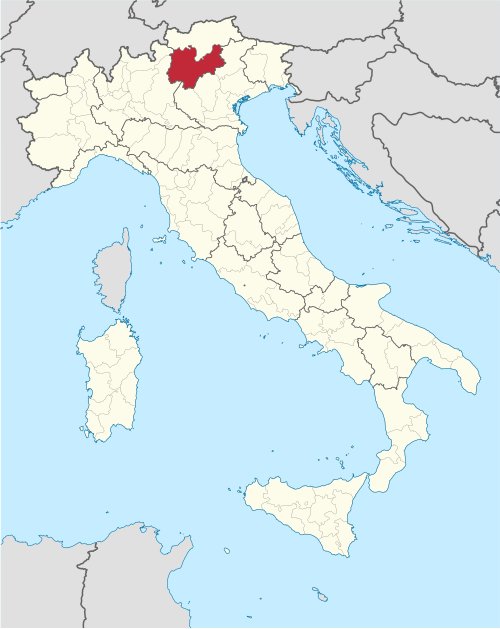
Nestled in a breathtaking Alpine valley, Trento—known as Trent in archaic English and Trient in German—serves as the vibrant heart of Italy’s autonomous Trentino province. With a population exceeding 120,000, this city is the third-largest in the Alps and boasts a storied history that predates Roman times, visible through its rich architectural tapestry. Surrounded by towering mountain ranges, Trento invites visitors to walk through centuries of cultural layers, where ancient relics and modern life intertwine amid stunning natural beauty.

Verona
Italy
Step into Verona, a city rich with history and romance, nestled in Italy's Veneto region. With around 250,000 residents, it's best known worldwide as the backdrop for Shakespeare’s timeless tale of Romeo and Juliet. Don't miss exploring the iconic Arena, a stunning ancient amphitheater that still hosts performances today. Recognized as a UNESCO World Heritage site, Verona offers a perfect blend of cultural heritage and charming streets that make it a must-visit for history buffs and lovers of Italian charm alike.

Ferrara
Italy
Nestled in Italy’s Emilia-Romagna region, Ferrara is a charming city that’s a UNESCO World Heritage Site, thanks to its stunning Renaissance architecture and its proximity to the Po River delta. Just 44 kilometers northeast of Bologna, this historic town boasts wide, welcoming streets and an impressive array of palaces that once hosted the court of the House of Este. With a population of around 132,000 (as of 2016), Ferrara offers a perfect blend of cultural richness and scenic beauty—definitely worth a visit for history buffs and architecture lovers alike.

Bolzano
Italy
Nestled in the heart of South Tyrol, Bolzano—known as Bozen in German—serves as the vibrant capital of this northern Italian region. With around 108,245 residents, it’s the biggest city in South Tyrol and a key hub in the Alps, boasting a diverse population where nearly a quarter speak German as their mother tongue. The city’s rich history is showcased at its renowned archaeology museum, home to Ötzi, the famous alpine ice mummy. Bolzano also earns its nickname as Italy’s Christmas capital, thanks to its charming and bustling holiday market. As a bilingual city where Italian, German, and Ladin coexist, Bolzano acts as a cultural bridge between northern and southern Europe. It shares the title of Alpine capital with Innsbruck, hosting the Alpine Convention and celebrating mountaineering heritage at the Museum of Archaeology and the Messner Mountain Museum, making it a true crossroads of mountain history and culture.