

Luxembourg
Luxembourg
Luxembourg, officially known as the Grand Duchy of Luxembourg, is a small but mighty landlocked country nestled in the Benelux region at the crossroads of Germanic and Latin cultures. This nation has carved out a reputation for its robust steel, finance, and tech industries, benefiting from a strategic position in the heart of Western Europe. Despite its modest size, Luxembourg boasts more natural beauty than you might expect and ranks among the world's top three wealthiest nations, reflecting its high standard of living—though that also means prices can be quite steep! The capital, Luxembourg City, sits at the confluence of the Alzette and Pétrusse rivers, just a few hundred kilometers from Brussels and Cologne. This city is steeped in history, with Luxembourg Castle dating back to the early Middle Ages, around which a vibrant settlement grew. Today, it’s a melting pot of cultures, with over 160 nationalities and a population of nearly 138,000, making it the most populous and diverse city in the country. As a vital hub for European institutions, Luxembourg City hosts the European Court of Justice, the European Parliament’s secretariat, and numerous other agencies, cementing its role as a de facto European capital. With a booming economy, excellent safety rankings, and a high quality of life, Luxembourg offers both a glimpse into its rich history and a window into its modern, cosmopolitan spirit.
Image: Wikimedia Commons
Get to know more
Districts
Mullerthal, often called Luxembourg's Little Switzerland, is a haven for outdoor enthusiasts. Its lush forests and dramatic rock formations, like the Schéissendëmpel waterfall and the Hohllay hollow rock near Berdorf, offer unique hiking and cycling experiences. The town of Echternach anchors the region with its rich Christian heritage, intact city walls integrated with residential towers, and lively festivals such as the annual E-Lake Festival at Lac d'Echternach. Visitors can also enjoy panoramic views from the 55-meter-high Aquatower in Berdorf, making Mullerthal a versatile destination for nature lovers and culture seekers alike. The Moselle Valley follows the course of the Moselle River, which flows through Luxembourg as part of a larger three-country river system. This region is characterized by its scenic river landscapes and vineyards, ideal for leisurely exploration and wine tasting, especially appealing to visitors looking for a mix of natural beauty and gastronomy. The Land of the Red Rocks, or Région Terres Rouges, in southwestern Luxembourg is distinguished by its iron-rich red rock landscapes and extensive railway heritage. Former mining railways have been repurposed into heritage train lines, offering a glimpse into the region's industrial past, making it a compelling visit for history buffs and train enthusiasts. Central Luxembourg encompasses the capital city, Luxembourg City, serving as the administrative and cultural hub. This area is suited for those interested in urban exploration, combining modern city life with historical sites. Éislek, located in the Ardennes hills in northern Luxembourg, is known for its rugged countryside and striking rock formations. It offers some of the country's most beautiful marked hiking trails, including the new high-quality Éislek Pied network. This district appeals to outdoor adventurers and those seeking tranquil natural scenery away from urban centers.
Districts
Mullerthal, often called Luxembourg's Little Switzerland, is a haven for outdoor enthusiasts. Its lush forests and dramatic rock formations, like the Schéissendëmpel waterfall and the Hohllay hollow rock near Berdorf, offer unique hiking and cycling experiences. The town of Echternach anchors the region with its rich Christian heritage, intact city walls integrated with residential towers, and lively festivals such as the annual E-Lake Festival at Lac d'Echternach. Visitors can also enjoy panoramic views from the 55-meter-high Aquatower in Berdorf, making Mullerthal a versatile destination for nature lovers and culture seekers alike. The Moselle Valley follows the course of the Moselle River, which flows through Luxembourg as part of a larger three-country river system. This region is characterized by its scenic river landscapes and vineyards, ideal for leisurely exploration and wine tasting, especially appealing to visitors looking for a mix of natural beauty and gastronomy. The Land of the Red Rocks, or Région Terres Rouges, in southwestern Luxembourg is distinguished by its iron-rich red rock landscapes and extensive railway heritage. Former mining railways have been repurposed into heritage train lines, offering a glimpse into the region's industrial past, making it a compelling visit for history buffs and train enthusiasts. Central Luxembourg encompasses the capital city, Luxembourg City, serving as the administrative and cultural hub. This area is suited for those interested in urban exploration, combining modern city life with historical sites. Éislek, located in the Ardennes hills in northern Luxembourg, is known for its rugged countryside and striking rock formations. It offers some of the country's most beautiful marked hiking trails, including the new high-quality Éislek Pied network. This district appeals to outdoor adventurers and those seeking tranquil natural scenery away from urban centers.


Frequently asked questions
Build a day-by-day plan in the app
Turns city guides into routed itineraries with maps and stories.
Nearby cities
Within travel distance of Luxembourg.
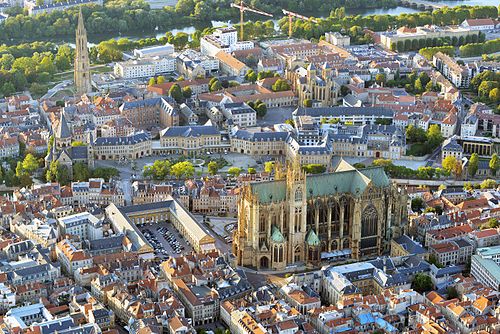
Metz
France
Nestled in northeastern France along the border with Luxembourg and Germany, Metz is a city rich in history and culture. At the meeting point of the Moselle and Seille rivers, it serves as the administrative heart of the Moselle department and hosts the regional parliament of Grand Est. Its location at the crossroads of France, Germany, and Luxembourg places Metz at the center of the European Greater Region and the SaarLorLux euroregion, making it a vibrant hub of cross-cultural exchange. With a history spanning over 3,000 years, Metz has witnessed its evolution from a Celtic oppidum to a vital Gallo-Roman city, a Merovingian capital, and the birthplace of the Carolingian dynasty. The city played a significant role in Gregorian chant and claims one of Europe's oldest republics. Its cultural landscape reflects a blend of French and German influences, shaped by its strategic position and complex past. Metz's architectural treasures include the stunning Saint-Stephen Cathedral, renowned for having the largest collection of stained glass in the world. The Basilica of Saint-Pierre-aux-Nonnains stands as France's oldest church, while the Imperial Station Palace offers a glimpse into its imperial history, housing the former residence of the German Kaiser. The city also boasts France’s oldest operational opera house, alongside world-class venues like the Arsenal Concert Hall and the Centre Pompidou-Metz museum. Known as La Ville Verte, Metz is celebrated for its abundant parks and green spaces, earning its nickname as the Green City. Its historic city center is one of France’s largest pedestrian shopping districts, blending commerce with charm. As a historic military town, Metz remains the economic engine of Lorraine, specializing in information technology and automotive industries. It is home to the University of Lorraine, Georgia Tech Europe, and cutting-edge research centers focused on metallurgy and materials science — a testament to the region’s rich iron and steel heritage.
Saarbrücken
Germany
Saarbrücken boasts a storied history that spans over a millennium, with roots tracing back to the ancient Roman Empire. Its architectural landscape reflects this rich heritage, set dramatically along the winding bends of the Saar River. As the capital of Germany’s Saarland, a federal state often overlooked by travelers, this city offers a refined gateway into a lesser-known corner of the country. With a modest population of around 180,000 residents as of 2018, Saarbrücken invites those seeking a blend of historic elegance and understated charm, making it a discreet yet captivating destination.

Nancy
France
Nestled in the Grand Est region of northeastern France, Nancy is a city rich in history and cultural heritage. As the capital of Meurthe-et-Moselle, it also serves as the economic hub of Lorraine. Home to over 47,000 students and three major universities, Nancy stands out as a vibrant academic center. Historically, it was a powerhouse of industry and culture in Northeast France, with its diverse architecture reflecting centuries of development. The heart of the old town, including the Ducal Palace, is designated as a UNESCO World Heritage Site, offering visitors a glimpse into its storied past.
Liège
Belgium
Nestled in the heart of Wallonia, Liège stands out as its largest city, blending a rich industrial heritage with lush green spaces. Wide boulevards wind through a cityscape that showcases an eclectic mix of architectural styles from various eras, creating a vibrant, if slightly chaotic, tapestry of history and modernity. The scenic riverbanks and rolling hills add a picturesque charm, while an array of museums and cultural sites promise an engaging exploration—perfect for an immersive day trip that captures the city’s dynamic spirit.

Aachen
Germany
Nestled at the crossroads where Germany, Belgium, and the Netherlands converge, Aachen stands as a city rich in history, academia, and wellness. Known as Aix-la-Chapelle in French and Aken in Dutch, it gained prominence in early Medieval Europe as the favored residence of Charlemagne, the first Holy Roman Emperor. His reign left a lasting mark through the construction of the magnificent cathedral, where he is laid to rest alongside subsequent German rulers, many of whom were crowned there. Beyond its medieval legacy, Aachen's famous thermal springs have drawn visitors since Roman times, complemented today by historic baths and hotels that celebrate this tradition. The city's modern identity is also shaped by the renowned RWTH Aachen University, a leader in technological research, which infuses the city with a vibrant, youthful energy. With a diverse cultural scene, a wealth of historic sites, and a thriving academic community, Aachen offers a compelling blend of the past and present.

Koblenz
Germany
Nestled along the banks of the Rhine and Moselle rivers, Koblenz stands as a vibrant hub in Rhineland-Palatinate, Germany. With a population of around 115,000 residents, this city marks the northernmost edge of the UNESCO-listed Middle Rhine Valley, renowned for its breathtaking landscapes and historical charm. A city with roots stretching back over two millennia, Koblenz was founded as a Roman military outpost around 8 BC, its name deriving from the Latin for 'confluence' — a nod to its strategic location where the Rhine and Moselle meet. Today, the German Corner at this confluence is a national symbol, crowned by an impressive statue of Emperor William I. Koblenz's picturesque setting, nestled in a narrow floodplain amid high hills, combines ancient history with modern connectivity, making it a must-visit for those eager to explore Germany’s rich cultural tapestry.

Maastricht
Netherlands
Nestled in the southeastern corner of the Netherlands, Maastricht is widely regarded as one of the country's most picturesque cities. As the capital of Limburg, it exudes a distinctive 'Burgundian' charm—an ethos of lively joie de vivre that captivates both Dutch and international visitors alike. The city’s scenic river Maas meanders through its historic core, offering lovely views, while its cobblestone streets are lined with centuries-old buildings, impressive cathedrals, and vibrant cafés. Whether you're here to explore its rich history, indulge in fine dining, or shop in boutique stores, Maastricht promises a memorable experience that combines cultural depth with relaxed elegance.

Bonn
Germany
Bonn, the elegant federal city nestled along the Rhine in North Rhine-Westphalia, offers an alluring blend of history, culture, and refined leisure. With a population of over 330,000, this city charms visitors with its intimate, small-town atmosphere—characterized by low-rise architecture, lush greenery, and a picturesque old town—just a short 28 kilometers south of Cologne. As a former capital of West Germany from 1949 to 1990, Bonn retains its political significance as a hub for federal institutions and international conferences. The city’s rich heritage is exemplified by its role in shaping Germany’s constitution, the Basic Law, and by being the birthplace of Ludwig van Beethoven, celebrated through numerous memorials and cultural events. For those seeking a sophisticated escape, Bonn’s vibrant street life, filled with cafes and summer beer gardens, rivals Italy’s most charming northern cities. It also serves as a perfect base for exploring the romantic Rhine, Düsseldorf, Cologne, and the enchanting Eifel region.